Zombie Photos!
January 11th, 2026Can These Dry Bones Live? Lightroom and Photolab say Yes
Today is the day of the week we reserve for God and family, so I will not be writing long.
I have been trying to save photos I took before I got my current phone and cameras. I got my old phones running and dumped a lot of things into my cavernous storage drive. I still can’t get the Galaxy S2 going, but I may be able to do it eventually.
I am learning two big lessons: first, there is nothing like having lots of photos of people and pets you love, and second, you should not throw out old shots until you have learned to use editing software, because often, a shot you thought was not worth keeping will, upon editing, turn out to be a digital heirloom.
As usual, I can’t upload the best examples of what I’m doing, and that is a major handicap when writing about photography, but at least there will be the writing, and that’s something.
I found a photo of my dad, taken in 2017. Thing is, it’s not a photo of my dad. We were at Tractor Supply, picking up the only decent new chainsaw in the county. A hurricane had just hit us with tropical-storm-force winds, and I managed to buy a Jonsered saw a few minutes after it was made available online.
My dad was not behaving all that well that day. In the car, I had tried to reason with him about something or other, and as we approached Tractor Supply, he told me to go to hell three times. Then he forgot all about it, and he was amazed when I brought it up.
I made it into the store before he did, and I saw something funny: a colorful metal chicken sculpture. I took a shot of it with the store window behind it. I guess I wanted to text it to a friend.
I was going through my old shots yesterday, and when I looked at the chicken photo, I saw that my dad was visible in the window, in the parking lot, on his way to the door. Maybe I included that on purpose.
It was not the kind of image that cheers people up. He looked frail and uncertain. Nothing like the strong, blustery, confrontational man he had been for most of his life.
I threw it into Lightroom, which I am trying out. The software lit up the chicken’s colors. I cropped the image to reduce distractions. I probably fiddled with the color. Now I have a touching shot of my late father fit to put on a wall.
I also found a photo of my buddy Mike standing next to a burn pile. It really captured him, so I cropped it and fixed the colors and lighting.
I won’t post these shots, but maybe I can find some other zombie photos that were saved by editing. Not prizewinners, but worth the effort.
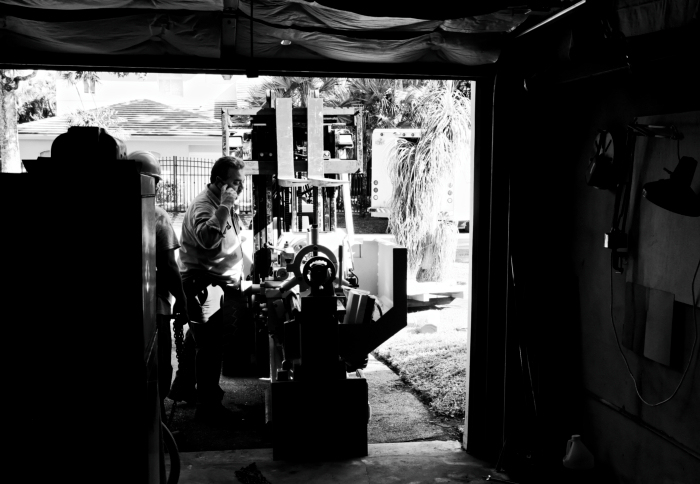
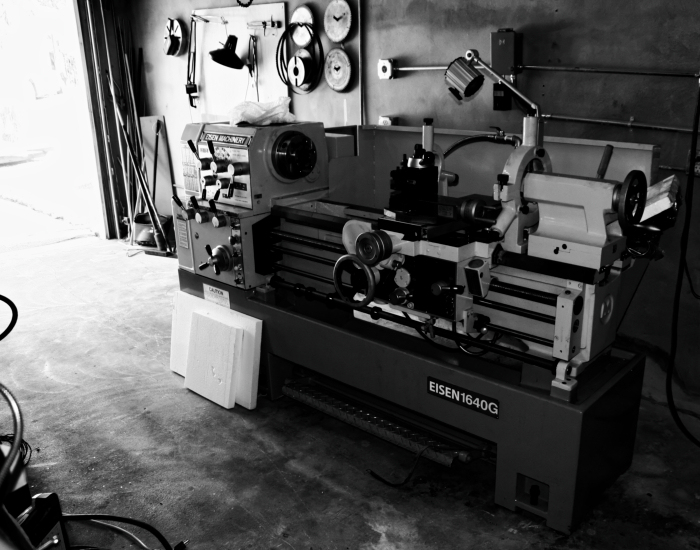
I have been trying not to get snobby about JPG’s. It is true that they are far inferior to raw photos for editing, and if you screw up a raw shot, you are much more likely to be able to turn it into a masterpiece, but JPG is not a bad format. If it were, people wouldn’t convert photos to JPG before saving them to disks or printing them. The phone shots I have been salvaging are all JPG. I will continue shooting in raw, but I’m not going to give up on old photos just because they’re JPG’s.
I’m also trying not to get snobby about lenses.
I have gotten used to listening to experts, and they are extremely picky. They find all sorts of faults with lenses. Many of these faults can be fixed after images have been captured, but they still sound bad somehow.
I am not stupid. I know that as long as a lens is pretty sharp and can produce images in real-world lighting conditions, I can use it to make excellent photos nobody will ever find fault with. In the real world, nobody gets out a microscope when looking at photos.
I happen to have a 9 mm manual focus lens I got for travel, and I tried to shoot my son with it. Even with focus peaking, I got images that were not sharp. Then I saw a video about a new, inexpensive 9 mm that has autofocus. I watched a couple of videos, and I ordered it. Now I have two 9 mm lenses, which seems like a waste of money, but the new one arrived yesterday, and I already have several fantastic photos.
It was a good investment.
The experts said it had something called “moustache distortion,” which was not easily fixed unless software companies made special profiles for this lens. Who cares? If a million people look at these wonderful photos, not one will notice distortion.
A lens may be soft in the corners or produce vignetting or have some other issue and still be a fantastic investment. Excellent photos taken with a middle-of-the-road lens are better than perfect photos you never get to take because you can’t afford the best.
I’ve spent a considerable amount of money on lenses, but if all I had were an APS-C camera and an 18-135 mm kit lens, I would be able to produce great work as long as the photographer was up to the task.
As an aside, I am getting irritated with people who think every portrait has to be tall and cropped and has to be shot with a long lens. Everyone seems to think human beings should be isolated in photos, and people seem to be obsessed with bokeh, the pleasant blurring that surrounds foreground subjects.
Guess what? A 9 mm lens is about as wide as they get, and it is magnificent for taking people’s pictures. If you want the standard waist-up photo which is taller than it is wide, which is exactly as creative as a passport photo, good for you, but wide photos allow you to add important context, and if you make a habit of leaving it out, in the future, people will wish you hadn’t. “Is that Daisy’s tail? Why didn’t you get her face?”
They also give pictures a dramatic look you can’t get with longer lenses.
As for bokehmania, it’s a restrictive, dogmatic fad. Sorry, but it is. When you want it, you want it, but it’s not for every photo. Often, it will cost you context you should have kept.
I should not be harsh or irritable. Most people are never going to think for themselves, and it is unfair to ask them to, but it would be nice if they didn’t insist on pushing the rest of us to put on their shackles. I am about to quit a forum because there is an old guy there who can’t think outside the box and gives me rude lectures when I don’t climb in there with him. He knows a lot of things, but too many of the things he knows are not true.
His photos are not good, by the way. I have encountered some extremely capable photographers on forums, and this guy is not one of them. My policy these days is to listen to people whose work is excellent. The rest are less credible.
I better stop. If you’re planning to learn photography, I suggest you be careful not to dump old photos because you think they’re embarrassingly bad in view of your new skill and knowledge. Run them through the editing process, and you may find there are a lot of babies in the bathwater.
January 14th, 2026 at 8:24 PM
I have always wanted to get into photography. Wonder what would be a good starting point, beginnerwise with equipment?
January 15th, 2026 at 1:44 PM
I don’t know if an eternal beginner like me is a good person to ask for advice, but of course, I will give it anyway.
I would start out with a smartphone. Spend a couple of weeks or a month learning what composition is and how to do it. Learn what a good photo looks like on your phone’s screen, and don’t shoot until you like what you see.
If you think you are going to stick with photography, download free Affinity and start editing your photos. This will work much better if you shoot in raw instead of JPG. Start cropping things to make them look better, and learn how to change the colors and lighting and so on.
After that, if you are enjoying yourself, you can think about a camera. I would go for APS-C because you get nice big photos with good resolution, but the lenses are much lighter and cheaper. I like Sony because there are all sorts of Sony and aftermarket lenses for them. Viltrox makes some fantastic lenses that cost less than Sonys. You can also get 4/3 cameras that are very good, with sensors that are a little smaller than APS-C.
Lens quality doesn’t mean a lot at first, except that lenses that work in low light are very helpful. Sooner or later, you will know what what you want, and you can add lenses.
Once you have a camera, you will have to study up on things like shutter speed, focal length, aperture, and ISO, because unless you shoot in auto mode all the time, the camera won’t help you like the smartphone.
KEH.com and MPB.com are good places to get barely-used equipment and save money. If you are willing to settle for cameras from the last decade, you can probably get a good camera and lens for $700.
January 17th, 2026 at 3:15 PM
Thank you.
Pretty good with the phone. My Samsung S24 Ultra takes some phenomenal pics at times. Looking at a Sony A6000.