My New Superhero Power: Bending Metal
September 16th, 2019Finger Brake Finished
I had another great day today. I finished building my Offroad Swag finger press brake…finger brake press…whatever.
I’ve wanted one of these tools for a long time. It will allow me to bend thick metal and make things from it. This is a huge advantage for anyone who likes to work with tools. A lot of people end up with disappointing things made from plywood or from angle iron badly welded with Home Depot welders because they can’t bend metal.
The thing that deterred me from building this tool in the past was the welding involved. I had done a fair amount of simple MIG welding, but I didn’t really understand a lot of things about welding. For one thing, I thought my welder wasn’t big enough to do the job.
When you buy a MIG, it will probably come with specifications and a little chart, and it may say you can only weld metal up to a certain thickness. I took those figures too seriously. I thought a welder that was only rated for 1/4″ steel was not the right tool for jobs involving thicker steel. That’s not true. I still don’t know where they come up with the figures, or what they really mean, but you can weld thick metal with a small welder. You may have to make more passes, but it can be done.
This finger brake (I checked the terminology) has what appears to be 1/2″ plate in it, and you have to weld 1″ rods to it. You also have to weld a very thick piece of angle iron to it. I didn’t know if I could get it done. I found out I was concerned about nothing, so that obstacle disappeared.
I was also concerned about my vision. I was having a lot of trouble seeing what I was welding. I got a better welding light, I turned my helmet’s shade down all the way, and I cleaned the lens. Now I see well enough to weld without a lot of problems, so I’m not as nervous about taking projects on.
Once I got the kit and started putting it together, I found out the biggest part of it tended to warp badly when welding, so that slowed me down. I learned a lot about reducing welding distortion, I came up with a plan, and I went forward.
Today I welded the guide tubes to the upper part of the press, and then I welded the angle iron lower die to the base.
The guide tubes were scary because Offroad Swag’s instructions are vague. I had to weld two upright tubes to a long rectangle of metal, with very good alignment. I had to figure out how to get it aligned to begin with and how to avoid distortion. I used a machinist’s square to scribe lines halfway across the tops of the tubes. I used calipers to scribe lines halfway across the parts the tubes were supposed to align with. I set the parts up on my welding table, tacked them in place, checked to see if they were still aligned, and welded them up.
The welds aren’t too bad.
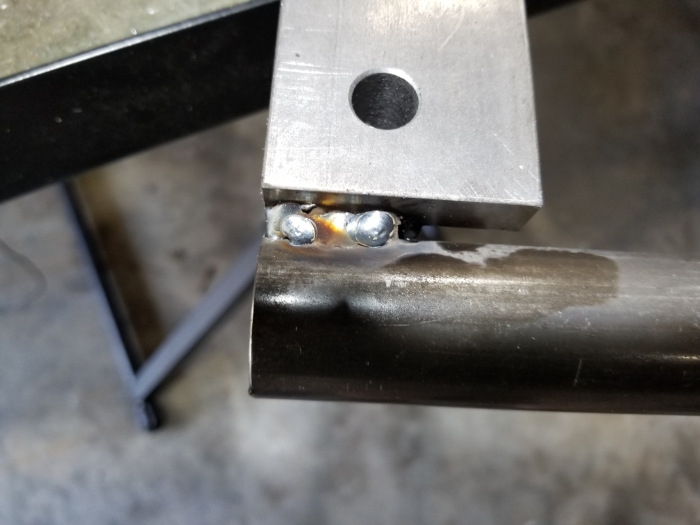
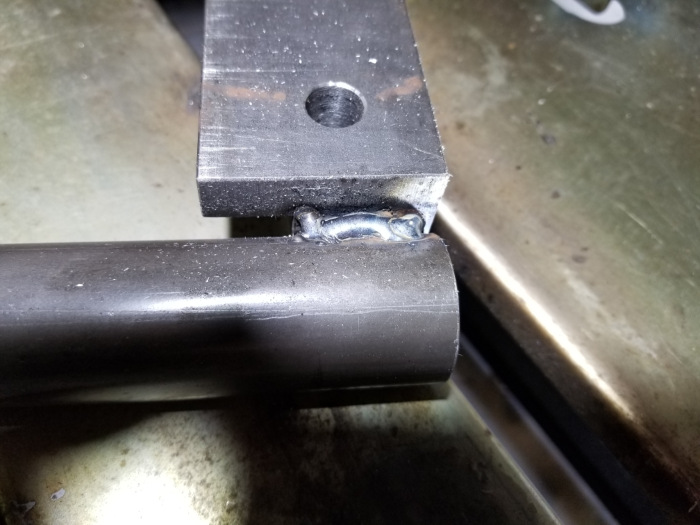
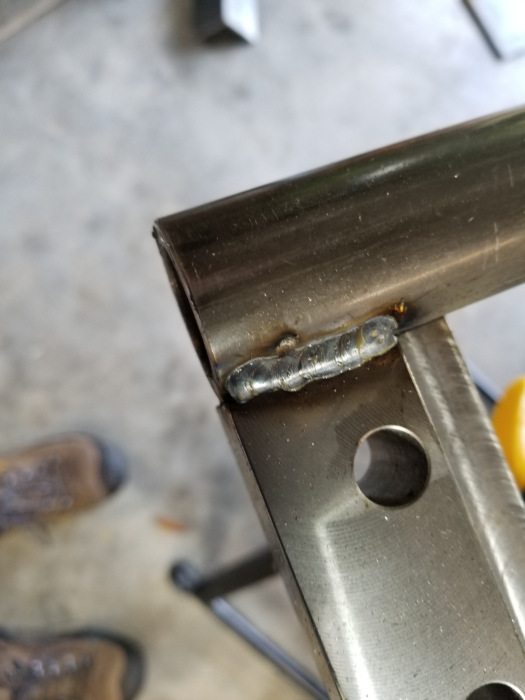
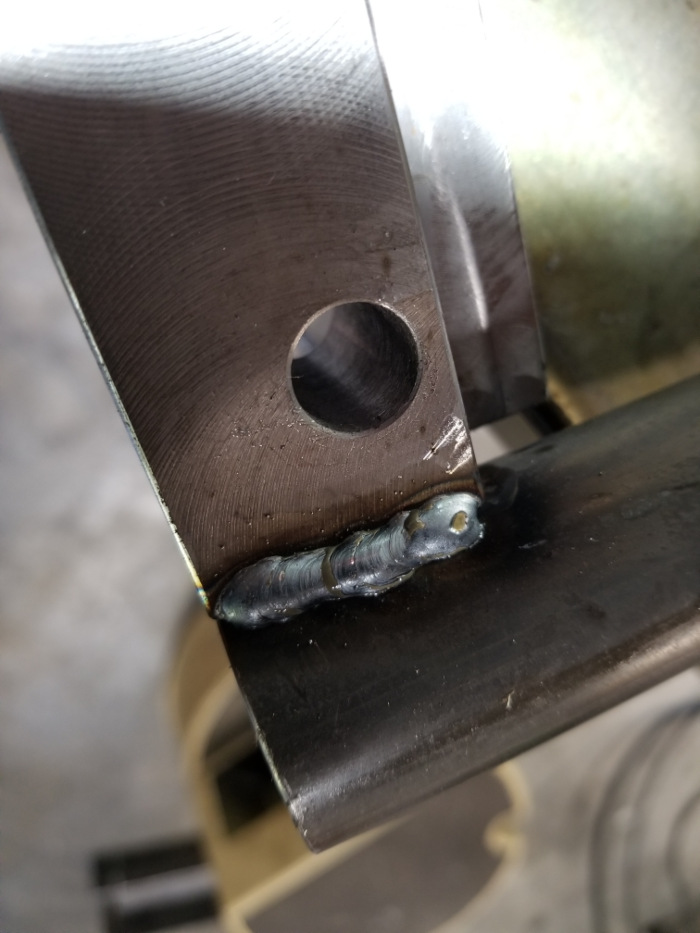
These particular parts see almost no strain, so there is no point in overwelding them. The more weld you add, the more you heat your parts, and the more distortion you can get. I tried to be economical. A lot of guys pour on the weld because they don’t know what they’re doing. It causes problems and wastes time and wire.
The only problems I had with the finished product were caused by Offroad Swag’s loose tolerances, and they didn’t affect the way the part functioned. I was thrilled to get such good results.
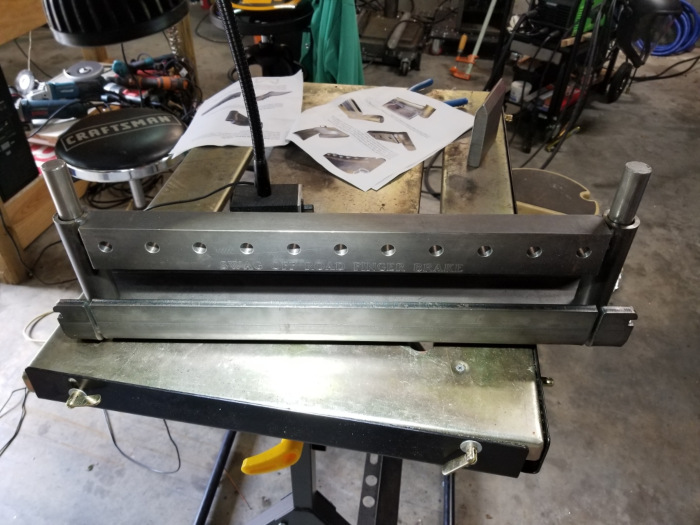
I decided to grit my teeth and weld the bottom die in place. The seams I had to weld were 19″ long, and there were two of them. Most people apply a ton of weld, in two continuous beads. There is no reason to do that. These welds don’t have to do much, so they don’t have to be huge.
I put soapstone marks on the seams one inch apart. I started welding with the middle inches. I welded one inch per side, put the torch down, and did something else while the parts cooled. Then I went back, skipped inches on both sides, and welded two more inches per side. This is called “intermittent welding,” and it prevents a lot of distortion-producing heat from accumulating in any area.
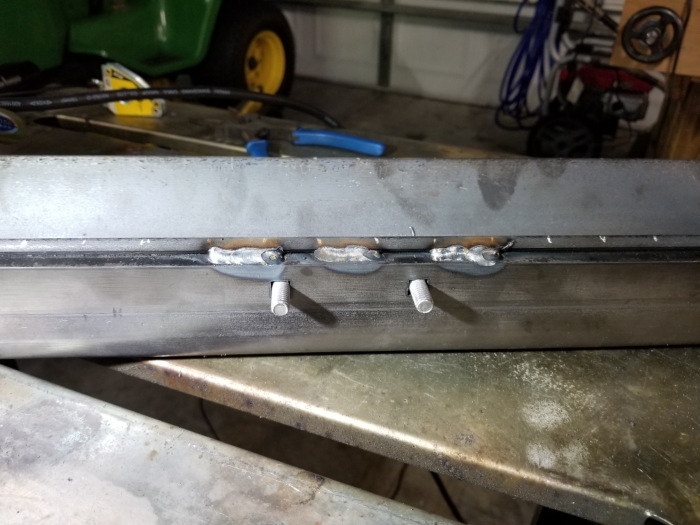
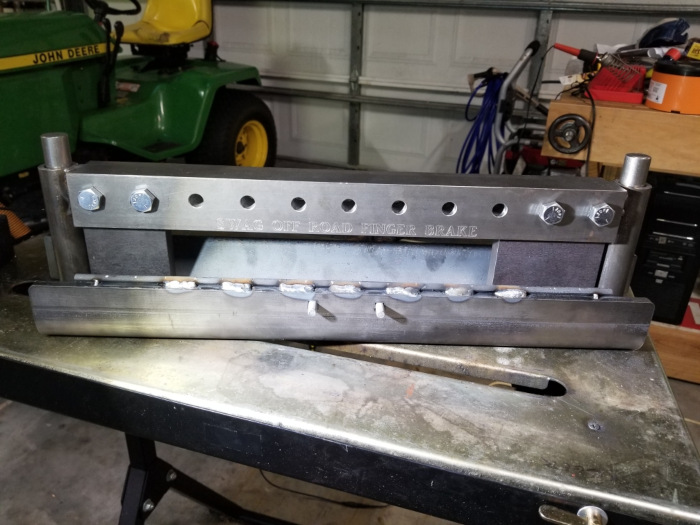
I didn’t finish the job for several hours, because I kept leaving to let the heat dissipate. I didn’t weld all 19 inches of either side. I welded about half of the seams’ lengths. I don’t see any point in doing more.
My guess is that a lot of people make big, thick, pretty, continuous beads on these things, and this is why there are so many complaints about warping. My brake won’t look as good, but on the other hand, it isn’t bent.
I assembled the brake and bent a piece of 2″ by 1/4″ flat bar. No problem. You can’t do that with a typical brake. This is why Offroad Swag’s product was so appealing to me. I see no point in spending a grand on a tool that won’t bend anything thicker than the lid of a barbecue.
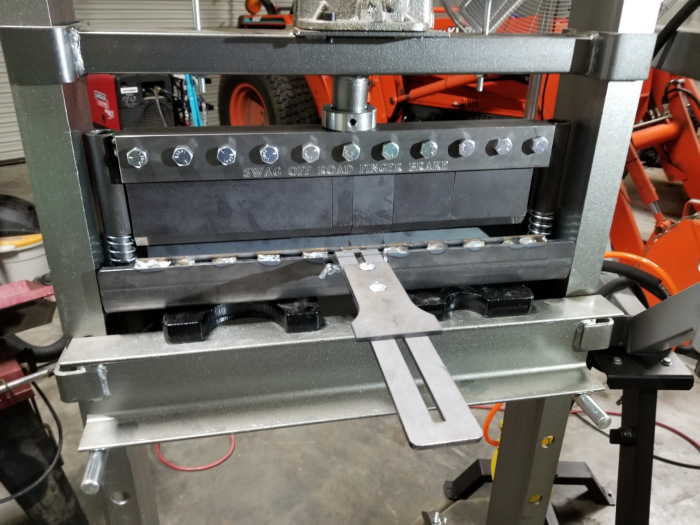
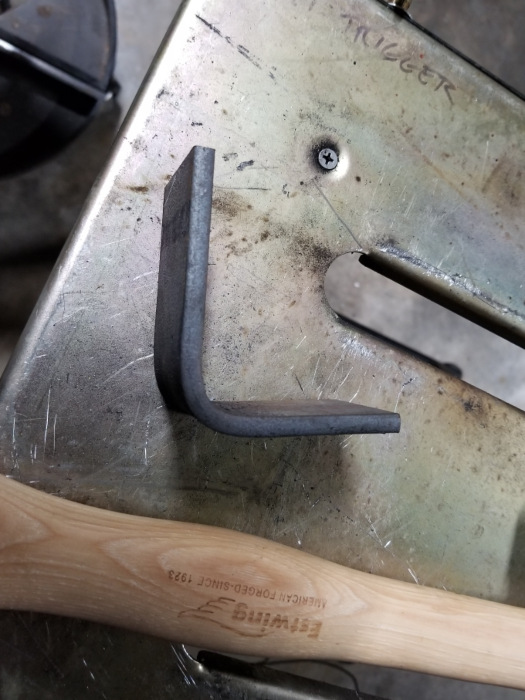
That bend isn’t too sharp, but there are ways to do better and get a nicer product, so I’m not concerned.
I can’t bend anything wider than 19″, but that leaves the door open to a huge number of useful projects. If I had blown a thousand dollars on a factory-made brake, I would be very limited in what I could do.
The kit isn’t perfect. They made one bar of steel about a millimeter shorter than it should have been, and they supplied a bunch of half-inch bolts which must be Chinese, because they don’t like to go into standard 1/2″ threaded holes. I chased the threads in some of the holes, thinking they hadn’t been tapped correctly, but the threads were fine. The bolts are just fat.
They made the bar that clamps the fingers in place slightly longer than it needs to be. When you weld the guide tubes on, the welds are likely to interfere with the bar’s fit against the top bar of the press. The instructions recommend grinding the welds down. Forget that. I like those welds. I took the bar to my belt grinder and beveled the ends of it to clear them. Took two minutes. I would rather grind their bar than my welds. It’s faster, and besides, those welds are the nicest ones on the brake.
I also painted the brace I made for my tractor’s front end loader. Unfortunately, it fell in the dirt after I applied the second coat. A gust of wind hit it while it was standing upright on a box. Dirt got into the paint on one end, so I had to blow it off with a hose. Now I have to fix the paint. Day after tomorrow, I should be able to put the leather pads on the brace with 5-minute epoxy and finish it.
Now that I have a finger brake, I have no conceivable excuse for not using it, so I need to design some useful things. I’ll get on that as soon as I can.
The Harbor Freight Titanium welder is a blast to use. I wish I had gotten it sooner, but then I couldn’t. They didn’t start selling them until recently. It welds flawlessly. People say the gun is on the cheap side and that it may wear out early, but I don’t care. The light, handy gun is one of the welder’s best features. If a MIG gun is clumsy, your welds will ramble all over the place. I’m happy to sacrifice durability for function. I can always buy a new gun.
That’s enough fun for one day. I look forward to more projects.