Sheath Gotta Have It
June 11th, 2019Because I Really Needed More Hobbies
In 2017, I started hunting. I did not accomplish a whole lot, but I did manage to kill a number of squirrels. I didn’t hunt much in 2018. My dad was declining, and I felt disinclined to kill things while he was approaching death. I can’t explain that. Killing squirrels and other pests is morally correct, so it wasn’t as though I felt it would be wrong. For some reason, I felt restrained.
When I started hunting, I knew I needed a sheath knife. A folding knife is a fine thing, but they’re less sturdy than sheath knives, and they’re impossible to clean well. If you use a folder to gut squirrels, it will always have a certain amount of filth trapped inside it.
I got myself a couple of very nice knives, but I was not happy. They came with sheaths made to go with belts, and I don’t like belts. They’re uncomfortable, they’re unhealthy (they raise blood pressure), and they don’t really hold pants up. They just slow the decline. You still have to pull your pants up many times every day.
Obviously, I needed sheaths that fit in the pockets of work jeans, but they don’t fall out of trees. If you want one, someone has to make it.
I got a kit so I could make myself a pocket sheath from Kydex. This is a tough plastic. You heat it and let it mold itself to your knife. In order to do this, you need a Kydex press, which is basically two thick sheets of foam mounted to boards. You put the knife and heated sheath in the press, you close it up, and when the plastic is cold, you have a sheath that fits your knife.
I haven’t gotten around to using the kit. Making a press is somehow unappealing to me, and I like leather better than plastic.
I looked into leatherworking, and I learned that it’s actually not significantly harder than using Kydex. You can get a world of leatherworking tools and materials for $150.00, and there isn’t much skill involved. I decided to try it.
To get going with leather, you need punches to make stitch holes, an awl to do the stitching, dye, appropriate thread for leather, and maybe a hole-punching tool and some Chicago screws. You can also get little tools for dressing the edges of leather and putting a shine on the edges of finished goods.
Chicago screws are screws that work like rivets. One end is a T-shaped nut, and the other end is a screw. When you screw the screw into the nut, you end up with a spool-shaped contraption. You run them through holes in leather and tighten them, and you get removable rivets.
Making leather knife sheaths takes very little time. A lot of the time it will take you to make your first sheath will be spent waiting on deliveries because you didn’t know what to get. Cut that excess out, and it takes around two days to make a sheath. It takes over a day because you will want to use water to mold your sheath to your knife, and water takes time to evaporate.
I decided I wanted sheaths with pocket clips. I found what is considered to be the best clip out there: the Ulticlip. You can look it up. They were created for gun holsters, but you can get models that fit smaller items. They lock very securely to waistbands and pockets. In fact, they’re a pain to fasten and remove, which means your knife is never going to fall out of your pocket.
I just finished the main body of work on my first sheath. I’ll post photos. The stitching is a little rough, so I think I’ll redo it, but it will work for now. I used a type of thread known as artificial sinew. It’s like tough, greasy dental floss.
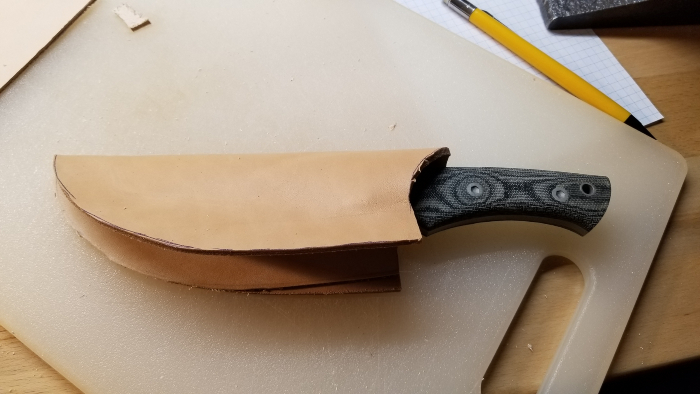
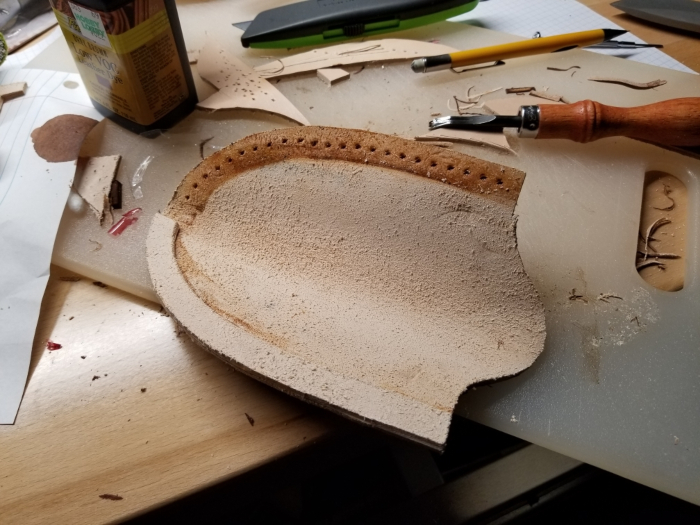
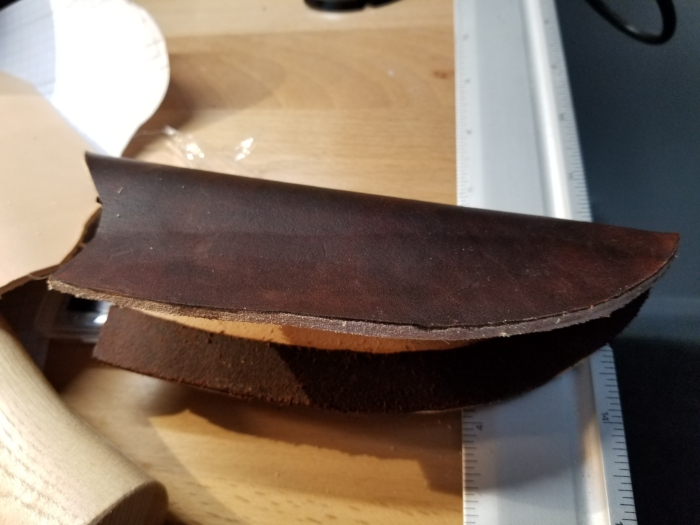
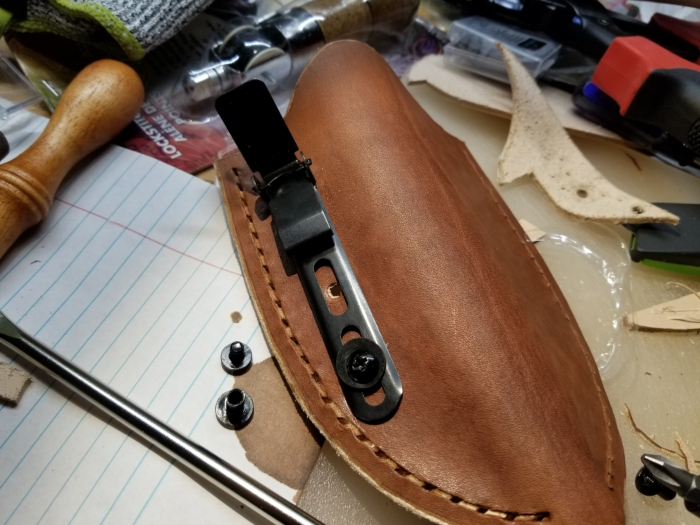
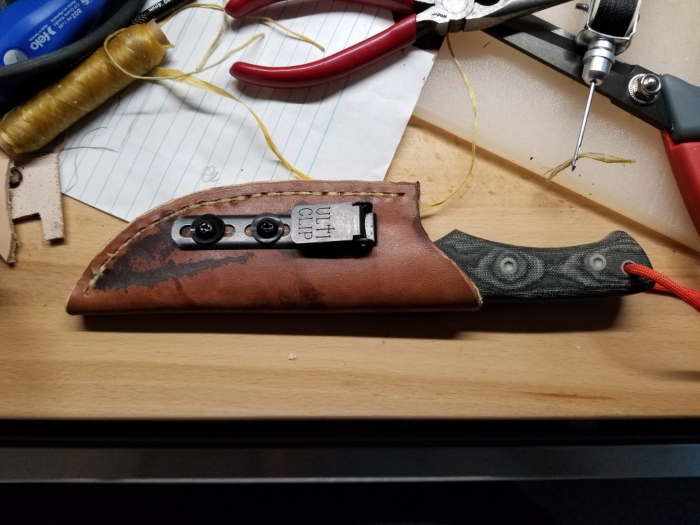
The knife is an Entrek Beaver. I originally wanted a model called the Javalina, but they sent me the wrong blade shape, and I ended up returning it and getting a Beaver.
I have no idea what thought process led to that name. They no longer sell it. I guess I can rename it. I’ll give it a more masculine name. I’ll call it the Entrek Roid-raging Mega-Jaguar.
Entrek, as I understand it, is actually a man named Ray Ennis. He makes handmade knives and sells them at very reasonable prices. You can find him on Youtube. He has videos showing exactly how he makes his knives. Once you’ve seen the videos, you can pretty much make your own Entrek knives if you’re handy.
He seems like a great guy. He’s having health problems, so it’s not certain the company will continue to produce.
Ennis uses 440C in all his knives. This is a very corrosion-resistant stainless that became popular in the Eighties. It’s not 440A or 440B; those are loser steels. My first really good knife was a Gerber made from 440C, so I wanted a sheath knife made from the same material.
People complain that 440C chips when you get it really hard, but Ennis says he has his blades treated with super-low temperatures, and he believes this makes them chip-resistant.
In any case, the Bea…Roid-raging Mega-Jaguar is a very nice knife. The handles are rough Micarta, a material so tough it may well be the last thing God manages to destroy when he remakes the earth. It’s shaped so you can grip it very securely. It should serve me well.
I’m planning to start carrying a sheath knife everywhere. Florida allows open knife carry. You have to be careful about local ordinances, but they’re easy to look up.
I used to think I could carry a switchblade anywhere in Florida because Florida law allowed it, but it turns out I was mistaken. Snowflake officials in some areas have banned large classes of knives with ordinances, so it may be that back when I carried a switchblade, I committed a number of serious crimes. Sorry for the many, many felonies I may have committed before I looked the ordinances up.
I always say virtually everyone is a felon. If you look hard enough, you will almost surely find a stupid law you violated in the past.
Dade County’s ordinances seem to ban open carry of knives, but it’s not clear. I don’t care, because Dade is a tacky, festering hole of unhappiness and immorality, and I plan to avoid visiting for the rest of my life, except when forced.
The Roid-raging Mega Jaguar is fine for squirrels, but with a thick blade over 4 inches long, I think it’s a little cumbersome for everyday carry. I decided to try a smaller knife. I’m getting a Lionsteel M1, which is a shorter sheath knife in M390 steel. I don’t know a whole lot about M390, but it’s among the “super steels.” I think Superman uses it to make stays for his underpants. It’s supposed to be really great. I tipped my hat to the past with a 440C knife, so now I feel like I’m free to get into snob metal.
The M1 is something like three inches long, which should be very handy around the farm. For all I know, it will even be better for squirrels.
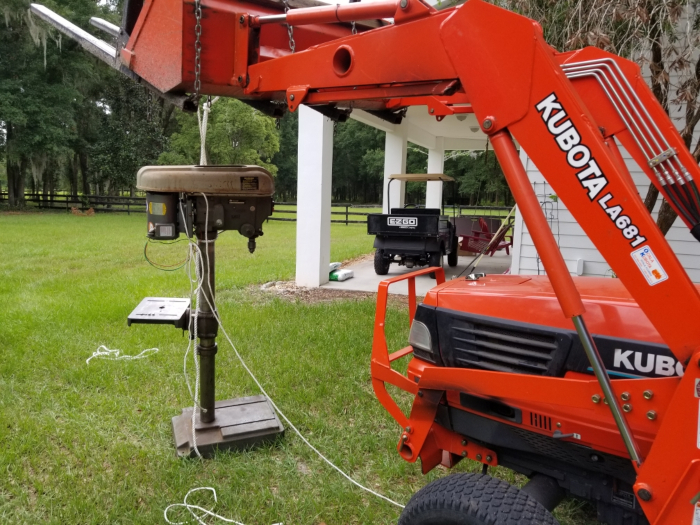
Believe it or not, fixed-blade knives really do work better than folders. I learned this the other day when I took my drill press and band saw out of my truck. I had to cut a lot of rope. I was taking my Cold Steel folder (CTS-XHP super steel!) out over and over, and because I’m too lazy to close it, I kept leaving it in various places, open, and then forgetting where it was. With a sheath knife, you just slap it back in the sheath every time you’re done with it.
I have a lot of hobbies, and sometimes I pick up hobbies that are useless, but I think I hit a home run with leather. It takes almost no skill, and it fills a gaping hole in my tool repertoire. Think of all the times you’ve needed a leather sheath, bag, belt or something, but you couldn’t get what you needed. Maybe you have a tool you use a lot, or maybe you have very specific ideas about a carry holster. If you can do basic leatherwork, you can get what you want without a lot of hassle or expense.
I know almost nothing about leathercrafting, but I can pass on a few tips. You don’t want Fiebing’s low-VOC dye. “VOC” means “volatile organic compound.” It refers to dangerous chemicals that give off fumes. It’s nice that Fiebing is trying to avoid killing customers, but the dangerous old dye works much better. Also, you want 7-8-ounce leather for knife sheaths. Lighter leather is flimsy, and heavier is hard to work with. The leather has to be vegetable-tanned, not chrome-tanned, because chrome-tanned leather rusts knives.
I don’t know what “vegetable-tanned” means. Maybe they take cowhide and rub it with salad.
My first sheath looks pretty good, even though I made a lot of errors. The second one should be as good as what’s available in stores. It’s just not that hard to do.
June 11th, 2019 at 4:00 PM
If you haven’t ordered that Lionsteel yet, you might want to hold off. Lionsteel’s M390 has been shown by several people to be several Rockwell points below optimum, although in the knife industry’s defense, Bohler-Uddeholm for some reason seems to think “optimum” is something other than edge retention where knife steels are concerned.
Bizarre.
Lionsteel’s Sleipner, on the other hand, is running rings around a whole lot of so called “supersteels”.
A steel making a big comeback for knife nerds right now is Sandvik’s 12c27. Manly knives out of Bulgaria is distributing to the U.S.A. and they do good things with that steel in their folders, although they don’t have any fixed blades in it. They do have a Patriot in CPM-154 that appeals very strongly to me, as it appears to be a fixed version of their Wasp, which I quite like. Like Opinel, Manly actually grinds their blades thin enough at the edge to cut.
Novel concept, which should tell you volumes about how screwed up knife manufacturing is these days.
June 11th, 2019 at 5:51 PM
The knife will be here today or tomorrow!
Where did you get your info? I can’t find it on the web.
June 11th, 2019 at 10:04 PM
YouTube, tests done by Supersteel Steve (who is very foulmouthed, I don’t think you’ll enjoy his channel much, but he’s doing actual cut tests), Outpost76 and the name of the other guy escapes me at the moment. They’re sending their knives off to be chemically analyzed and hardness tested. What they’re finding is that Lionsteel (and almost all other companies with the exception of Spyderco) are running M390 at 58-60 HRC. The problem is twofold, in that 1: there is a 100% improvement in fine edge holding between 59 and 62 Rockwell for M390 and 2: M390 at 59 Rockwell isn’t any better than a whole lot of steels which are much less expensive.
Knife Knerd Rage is intensifying, as if the world needed one more source of anger.
There doesn’t seem to be much of a mislabeled steel problem, thank Heavens.
June 12th, 2019 at 10:40 AM
Thanks for the nerd data.
Super Steel Steve doesn’t have any videos about Lionsteel M390, and I can’t find any on Outpost76’s channel. They do mention other brands. Lionsteel claims 59-60 on its site, and their knives seem to do well when Youtube nuts beat them up.
I think I’m going to give this knife a shot, unless it has QC problems.
They also make a weird survival-tool sort of knife. Ugly, but probably very useful.
June 12th, 2019 at 1:55 PM
Hope you like it, and it should still outperform 440C by a fair margin. I have a couple of their slipjoints and even at lower Rockwells M390 is going to outperform most other slipjoint choices.
Pity no one is making fixed blades in Maxamet.
Big Brown Bear on YouTube is a knifemaker experimenting with extreme steels in extremely thin slicey blades. Several of his recent efforts look like they’d break down small game really well, but I have to admit to exactly zero practical experience doing that, so you’d be able to judge far better than I would.
June 12th, 2019 at 2:37 PM
I can’t feel too bad about 440C. I remember what knives were like when I was a kid, and back then, 440C seemed like a miracle steel. So much better than what I was used to.
June 12th, 2019 at 2:49 PM
Exactly. In it’s day 440C was considered a super steel.
I read somewhere that a hundred years ago or so most knife companies expected their customers to use up and discard their pocket knives within three years. These days most knife knerds don’t use their knives enough to use one up in a lifetime.